
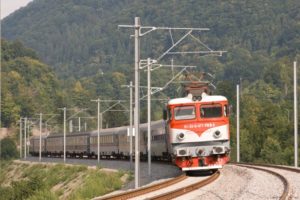
 EUR 300 million for rolling stock
This September, the Romanian Railway Reform Authority (ARF), subordinated to the Romanian Ministry of Transport, will launch the tender for the procurement of electric and multiple-units. The declaration was made on 9 July by Romanian Minister of Transport, Răzvan Cuc.
The new rolling stock procurement project amounts to EUR 300 million. At the moment, it is necessary to buy over 100 electric units, trains and diesel units to meet mobility demand and train timetable on the main routes of Romania. After procurement, the new trains will travel between Bucharest and Craiova, Constanta and Brasov, but also on the upgraded western sections of the country.
Currently, CFR Călători’s rolling stock fleet includes 1 532 units: 1 050 cars (950 classic cars, 100 sleeping coaches, couchette cars, restaurant cars and bar-bistro cars), 126 multiple-units (68 Desiro, 8 ADM11, and 50 others), 8 EMUs and 348 locomotives (237 electric locomotives, 111 diesel electric locomotives and hydraulic).
The decision of establishing the Railway Reform Authority was made based on the fact that Romania has to implement, according to the approved General Transport Master Plan, the railway sector reform focused on four directions such as:
- the reconstruction of the rail transport network to focus on an efficient transport network so that the allocation of funds for maintenance and running repairs would be focused on a financially sustainable rail transport network;
- the attribution of public services contracts for railway operation so that passenger transport would take place only based on tenders organized under the law that regulates rail transport operators;
- the introduction of performance indicators to represent the foundation of monitoring the legally concluded public services contracts;
- the introduction of programmes to boost the efficiency of activities in the railway sector, including for CFR SA, that need to be implemented by a specialized structure under the authority of the Ministry of Transport.
The procurement of rolling stock dedicated to railway passenger transport services is also one of the Romanian Railway Reform Authority’s attributions.
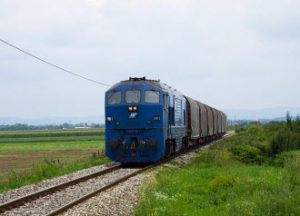 The Serbian government expects to finalise its talks with the European Investment Bank (EIB) over receiving funding for the overhaul of the Nis-Dimitrovgrad railway at the Western Balkan summit in Trieste, Italy, according to Infrastructure minister Zorana Mihajlovic.
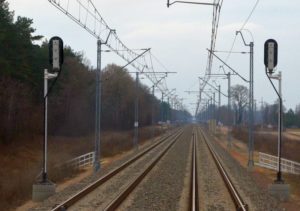 Poland’s rail infrastructure manager, PKP PLK, selected Budimex to upgrade two sections of Line 7, which links Warsaw and Dorohusk with the Ukrainian border. The two contracts are worth a total of PLN 986 million (EUR 233 million).

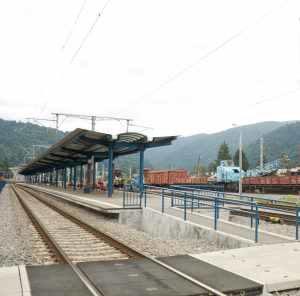 “The Railway Supervision National Council” (CNSDF) will take action to ensure a normal competitive climate by analysing and adopting solutions for the situations that can occur in the rail transport market, such as unfair, discriminatory or unrighteous treatment, especially because of the practices and decisions of the infrastructure manager, or of the rail transport operator. This year, we will launch a report on the railway transport activity and hopefully, it will be useful to all factors that are active in this system”, declared Dragos Popescu, Competition Inspector – Railway Supervision Department, Competition Council, during the Railway PRO Technology and Services Forum, organised by Railway PRO and Club Feroviar, with the support of the Romanian Railway Industry Association (AIF) in Arad, on 5-6 April.
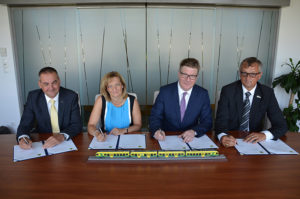 Hungarian regional operator GYSEV Zrt. and Stadler signed a contract for the delivery of 10 four-car FLIRT type electric multiple units for regional operation. The first vehicles are expected to start
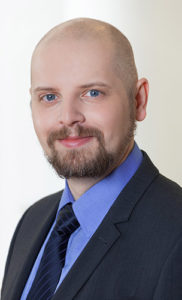 Philipp Koiser was born in 1980 in Austria. After graduating from the Business Academy in Vienna, he started his railway career at ÖBB Infrastruktur Betrieb AG (now ÖBB Infrastruktur AG) in 2006. After a first year as a station master, he was Key Account Manager at Network Access from 2007 until 2014. Besides coordinating national and international paths he was involved in two projects: ‘Euro 2008’ (planning of timetables and related measures during the European Football Championship 2008) and ‘Liberalisation of passenger traffic’.
